Michael H. ThiedeI,*; Marianela Castillo-RiquelmeII
IIGES Institute, Berlin, Germany
IIMinisterio de Salud, Santiago de Chile, Chile
Date of database searches: January 2009.
ABSTRACT
]]> BACKGROUND: Poor and deprived groups benefit less from preventive and curative interventions than the general population, despite the availability of a range of interventions that are generally considered effective.
Introduction
Poverty and infectious diseases are closely linked; poverty often predisposes individuals to infectious diseases and, moreover, infectious diseases may lead to deterioration in individual and community socioeconomic status (1). Despite the availability of a range of interventions that are generally considered effective, poor and deprived groups benefit less from preventive and curative interventions than the general population (2). This review assesses the degree to which control programmes for infectious diseases benefit the poor. We should assume that only interventions and programmes that are effective produce benefits for any subgroup of the population, so effectiveness is a necessary condition. The criteria for classifying an intervention or a health-care programme as "pro-poor" are not clear from the literature (3).
Can an intervention be described as "pro-poor" or "reaching the poor" if there is some benefit to the poorest groups? Do we require the poorest to be benefiting proportionally? Or is a programme only "pro-poor" if there is measurable over-proportionate benefit among the poorest as compared to the rest of the population? The latter criterion might be appealing as it reflects some notion of progressivity, which is a principle that is applied in the analysis of equity on the financing side. To arrive at a meaningful consensus on what the preferred characteristics of a pro-poor programme should be is difficult. Part of the complication arises from the fact that the need for health services is distributed unevenly across population groups. The benefits to the poorest groups should be evaluated against their relative need, as in the case of infectious diseases which tend to affect poorer groups to a higher degree (4). This does not necessarily mean that any intervention effectively addressing an infectious disease can automatically be regarded as pro-poor. This review also explores the evidence on the "pro-poorness" of different programmes and interventions.
]]>Methods
We conducted a search in Medline, Science Direct and Google Scholar of peer-reviewed articles and grey literature addressing research on infectious diseases in low- and middle-income countries. The search string combined three components: The first component selected the literature that referred to one or more of the terms "pro-poor", "equity", "socioeconomic" or "access"; the second component combined the medical subject headings (MeSH terms) "communicable diseases", "tuberculosis", "malaria" and "HIV infections"; the third component specified the search to consider the terms "intervention", "programme", "strategy", "treatment" or "control". In the different components the search terms were truncated and labelled such as to allow a variation in spelling, singular and plural forms etc. and thus, a maximum outcome.
Identifying specific experiences in reaching the poor with infectious diseases programmes was the primary focus of the review. A critical assessment of the quality of the evidence presented was conducted. This quality check sought to ensure that the focus of the paper remained on interventions addressing one or more infectious diseases in a developing country context. Furthermore, studies reviewed should either explicitly address the poor or report results by socioeconomic status. Finally for the strength of the evidence on effectiveness, a comprehensive description of the intervention and a discussion on sustainability were scrutinised. It has to be acknowledged, however, that the breadth of the topic and the explorative approach towards the ambiguous objective of "pro-poor effectiveness" limit the applicability of more rigorous formal criteria as ideally employed in reviews with a more precisely defined objective.
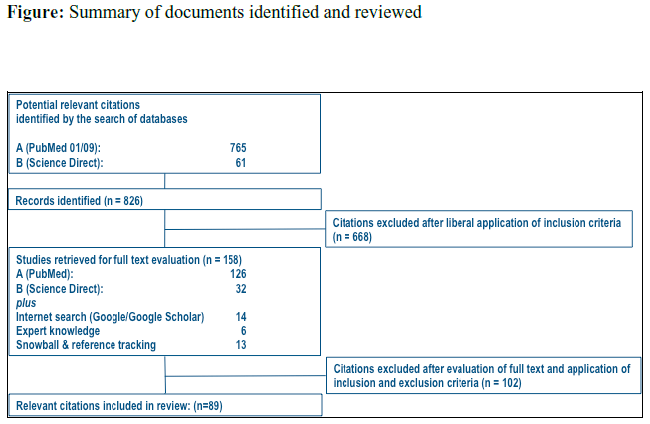
After the abstract review around 80% of papers were discarded. Those discarded can be categorised as follows: Database deficiencies (e.g. articles not on infectious diseases); focused on issues outside the socioeconomic paradigm; had an exclusive focus on determinants of incidence or prevalence of infectious diseases (e.g. risk factors, disease knowledge) and not on interventions that reach or do not reach the poor; or focused on nutrition interventions or exclusively on vaccine preventable diseases.
Diseases and pro-poor interventions
The literature search in Medline and ScienceDirect identified a total of 826 publications and an additional 33 from reference tracking, recommendation from experts and Google Scholar (Figure). 89 reviews were selected on the basis of previously agreed inclusion and exclusion criteria.
Malaria
A considerable body of evidence suggests that malaria especially affects the poorest countries and among them the poorest population groups. Worrall and colleagues found mixed evidence on malaria incidence by socioeconomic group (5). They reported important differentials in the uptake of malaria control interventions across three categories: 1) use of preventive measures (such as coils, sprays, repellents and chemoprophylaxis), 2) ownership and use of malaria bed nets and 3) choice of health-care provider for treatment. They found malaria control interventions were used less by the poorest (measured through a variety of indicators). The poorest were more likely to opt for self-treatment and less likely to use private or other higher level public providers. Differential uptake of malaria interventions can be the result of the economic burden that the disease poses on poor households and the cost barriers of seeking care (1,6).
]]> Different socioeconomic levels even among neighbouring communities influence home management of malaria. In Ghana, Biritwum and colleagues followed up children under five for one year in two adjacent communities in Accra with different socioeconomic characteristics (7). A child from the poorer community was less likely to have been taken to a clinic or hospital to be treated for malaria than a child from the better-off community. Variations in socioeconomic and economic characteristics were significant in explaining the incidence of malaria in rural households in Benin (8). Monthly expenditure and socioeconomic status (as enabling factors) were found to have a significant positive impact on malaria incidence. The authors of the study suggest that the better-off demonstrate improved case reporting and are more likely to seek treatment.There is limited literature explicitly focusing on pro-poor interventions for malaria prevention or treatment. However, Barat and colleagues attempted to examine the pro-poorness of malaria interventions (9). They document some examples of inequities in risk of infection, access to preventive measures and consequences of the disease. They acknowledge, however, the lack of definite evidence on interventions that successfully reach the poor.
An inequitable distribution of malaria prevention strategies was also reported in Sudan (10). In this study, socioeconomic status was positively related to expenditures. The poorest households spent the least amount of money to prevent malaria and were the least likely to own mosquito nets.
The distribution of discounted vouchers for insecticide-treated nets (ITNs) to vulnerable groups has been widely recommended as an approach to reach the poor and vulnerable. However, evidence on pro-poor effectiveness is scarce. The distribution of ITNs in 26 countries in Africa has been found to be strongly concentrated in the least poor households (11). ITNs were found to be more inequitably distributed than untreated bed nets (UTNs) and routine immunisation programmes. Subsidised selling of ITNs has not improved equity of access. In this context, national UTN re-treatment campaigns are recommended as a rapid scale up of equitable ITN coverage.
A study from Kenya assessed the effects of alternative delivery models of ITNs in Kenya between 2004 and 2006; after an incremental availability of nets from the commercial sector, a programme offering subsidised nets through clinics was followed by free mass distribution of ITNs. Applying an asset index to determine the wealth status of the homestead, the authors show that the free mass campaign had a strong pro-poor effect, while the clinic-based programme had a weaker effect but was still considerably more equitable than commercial social marketing (12)
Kikumbih and colleagues demonstrate that social marketing of mosquito nets in Tanzania reached a higher coverage in the lowest socioeconomic group compared to a control area (13). The intervention comprised mass media campaigns and a discount voucher scheme. However, the introduction of a branded ITN in the local market was considered the main intervention. In the intervention area 51% of the households of the poorest quartile (measured by income) had at least one bed net as compared to only 22% in the poorest quartile of the control area. Although differential coverage among quartiles within the intervention area was not discussed, the overall coverage of 72% suggests a significant rich-poor rate. A different presentation of the effects of the programme across socioeconomic groups (expressed in wealth quintiles on the basis of an asset score) clearly shows that social marketing led to higher increases in net coverage among the poorest than the least poor (14). Referring to the same intervention and setting, an earlier paper reported that, in the intervention area, a child in the least-poor quartile was 2.74 times more likely to own a bed net than a child in the poorest quartile (15). This study is a rare example of a well-evaluated programme that shows a pro-poor effect against a control area but a pro-rich effect in the intervention area.
The Tanzanian national voucher scheme for ITNs has recently been assessed and characterised as a cost-effective strategy for delivering subsidised ITNs to targeted vulnerable groups (16).
Mathanga and colleagues conducted an evaluation of a social marketing programme for ITNs in urban Malawi with a focus on both protective efficacy and utilisation across socioeconomic groups (17). The use of ITNs was associated with proxy indicators of socioeconomic status, such as number of household items, as poorer households were 60% less likely to use treated nets. The study's findings are consistent with the other cited studies on ITN social marketing programmes.
In Ghana, discount vouchers for ITNs were distributed to pregnant women attending antenatal clinics in the Volta region (18). Three months post-implementation, it was found that a significant proportion of staff decided not to provide vouchers to women, because they were not able to pay the top-up fee. Although the study does not show results by socioeconomic status, it is reported that the number of vouchers distributed varies greatly geographically and across districts.
Using DHS data from 11 African countries, Worrall and colleagues report that interventions for malaria in pregnancy failed to reach the poor (19). Not only did ITN coverage among pregnant women generally remain very low but it was also highly biased towards the urban and wealthier women. The authors also report inequities in the uptake of other interventions in pregnancy including Intermittent Preventive Treatment (IPT) and case management.
]]> A community approach using "community resource persons" was found to be effective at increasing access and compliance to IPT among the most vulnerable pregnant women in Uganda (20). The easy accessibility of the resource person and the frequent home visits contributed to trust and acceptance.The integration of ITN distribution into measles vaccination campaigns has been the subject of two studies: A programme in one district in Ghana distributing free ITNs targeted at families with small children and a two-tiered programme in Zambia distributing free ITNs in four rural districts and vouchers in an urban district (21,22). In both settings clear improvements towards an equitable coverage could be observed. The operational costs of the voucher model in urban Zambia were significantly higher than the costs of providing free ITNs in the rural districts.
Among the few behavioural interventions reported in the context of malaria is the case of an education and knowledge programme implemented on a pilot basis in Sri Lanka (23). The intervention, a 20-week educational programme, consisted mainly of participatory exercises. The evaluation showed a significant improvement in knowledge about and actions toward mosquito control in the intervention villages as compared to control villages. There were no differences in the effect of the intervention by socioeconomic characteristics of households.
Of course, a longer-term evaluation period would allow an observation of the degree to which greater knowledge translates in behaviour change and into the final relevant outcome (e.g. malaria cases prevented). However, the degree to which knowledge translates into behaviour change is unclear, especially in the context of ITN use (24).
Panter-Brick and colleagues present the results of a behaviour change intervention, "repairing household bed nets", in rural Gambia (25). The observations suggest that some communities might be too poor to benefit from certain interventions, even if these are specifically designed for them.
Macroeconomic policies can have a significant impact on the effectiveness of infectious disease control programmes. In the 1990s, Nicaragua experienced its worst malaria epidemic, partly caused by the country's macroeconomic structural adjustment programme (26). Malaria outbreaks particularly affected the poorest rural and formerly rural population (now living on the outskirts of Managua).
Among the few successful stories of malaria control at country level is the case of Eritrea (27). The strategy relied strongly on community involvement through health worker recruitment and training, ecological management, indoor residual spraying (IRS), ITN distribution and re-impregnation as well as early diagnosis and effective case management. At the end of 2004, Eritrea had reduced malaria morbidity by 80%, ITN coverage was greater than 70% in endemic areas and households protected by IRS had more than doubled in this period. Specific characteristics of this approach highlight an increase of almost 300% of community health worker recruitment and training and the donation of ITNs targeting firstly pregnant women and children under five. Variation in the success of this strategy by different socioeconomic groups is not known.
HIV/AIDS
Literature on specific pro-poor interventions with regard to HIV/AIDS is sparse. On the other hand, the high cost of antiretroviral drugs (ARV) is a general constraint for many people in need. Thus, it is expected that the poorest are potentially more deprived of ARV treatment in developing countries. Fenton explains the potential relationship at a global level between poverty and HIV, as well as the association of poverty with increased HIV prevalence, on the grounds of increased susceptibility of the poor to infectious diseases (28). She discusses preventing HIV/AIDS through poverty reduction as a core long-term sustainable solution.
There is limited literature on HIV/AIDS programmes where progression to universal coverage with special consideration of reaching the poor has been deemed successful. Among the few interventions targeting the poorest through HIV treatment is the experience of Haiti (29-33). Direct observed therapy with highly active antiretroviral therapy (HAART) was first implemented as a pilot project in a poor rural community and later scaled up to the entire Département du Centre (a population of 550,000) under the auspices of the Global Fund to fight AIDS, Tuberculosis, and Malaria (GFATM). The initiative relied on using existing TB control infrastructure. Building on the experience of the TB programme, each HIV patient had an accompagnateur (often a community health worker that received special training) who observed ingestion of pills, responded to patient and family concerns and offered moral support. The programme also involved social support including assistance with school fees. It was concluded that the successful implementation of treatment in a setting of high levels of deprivation can be achieved with sustained commitment to free uninterrupted care. The successful increase in access to the programme in Haiti has been the result of reducing barriers to utilisation especially for the rural poor by means of user fee waivers, integration of HIV testing in clinics, free provision of medicines and monitoring tests as well as coverage of transport costs for follow-up visits. These measures have been complemented by home-based adherence support and nutritional support when needed (32).
]]> The differential utilisation of voluntary counselling and HIV testing (VCT) services by socioeconomic status in a poor peri-urban South African setting has been analysed by Thiede and colleagues who observed that the perception of public sector services as being of poor quality leads the relatively better-off among the poor to incur extra costs (34).HIV and AIDS service NGOs have been involved in microcredit activity with the aim of lightening the economic burden of affected families. Based on the Kenyan example, Datta and Njuguna suggest that sustainable solutions require the cooperation between NGOs, donors and microfinance organisations (35).
Tuberculosis
With an estimated two million deaths each year, tuberculosis (TB) is the second leading cause of death among infectious diseases worldwide. More than 95% of the estimated eight million new cases worldwide occur in the developing world, where more than 80% of cases are among people aged 15-49 years (36). There is a strong association between the incidence of tuberculosis and the prevalence of HIV infection in Africa, where in some countries rates of HIV infection among TB patients exceed 60%.
WHO and the International Union Against Tuberculosis and Lung Disease (IUATLD) recommend the DOTS (directly observed treatment, short-course) strategy to control tuberculosis. The five elements of DOTS are political commitment, case-detection by sputum-smear microscopy, short-course treatment with effective case management (direct observation), regular drug supply and systematic monitoring. Where rates of drug resistance or HIV infection are high, DOTS should also be used as a basis for more complex TB-control strategies (37). DOTS can be characterized as a programme that focuses mainly on the individual-level intervention, yet also addresses the structural level.
There is no clear evidence on TB prevalence across socioeconomic strata in different regions of the world, and it is argued that most undetected cases are likely to be located among the poor (38). Social conditions predispose individuals to TB, such as over-crowding, inadequate housing and malnutrition (39, 40). Although it has been argued that "TB thrives in conditions of poverty and can worsen poverty", the inter-linkages between poverty and TB have not been systematically analysed. Nonetheless, some of the evidence has been reviewed (41-43). The conclusions suggest that particular attention needs to be paid to the socioeconomic determinants of TB and to the TB patients within the poorest population groups. A thorough review of individual and household determinants of malaria, TB and HIV/AIDS by Bates and colleagues highlights some of the factors linking poverty, TB infection and disease (44). The authors draw attention to housing conditions (overcrowding and lack of ventilation), the costs incurred while seeking diagnosis and treatment for TB, and the influences of education, knowledge and behaviour within socio-cultural groups.
Socioeconomic conditions also impact negatively on access to TB care (45,46). A recent study based on China's 2003 National Household Health Survey found that both breadth and depth of TB services were comparatively low in poorer rural areas; furthermore, both receipt of care and affordability of TB services declined with socioeconomic position (47). The problem of affordability arises even if services are provided free of charge. A study conducted in Malawi found that direct costs associated with the service (e.g. food and transport) as well as indirect costs (e.g. work days lost), though a major economic burden across socioeconomic groups, take on significantly more dramatic dimensions when a woman or when the poor are sick (48). Other studies also highlight the ‘hidden costs' of TB treatment as a major factor for nonadherence (49). TB patients with so-called social risk factors demonstrate a higher proportion of unsatisfactory treatment outcomes (50).
The Stop TB Partnership has introduced a Second Global Plan to Stop TB 2006-2015 in the light of the MDGs, including six steps to address poverty (51,52). While this approach incorporates structural interventions to target populations and thereby acknowledges differential vulnerability, it does not tackle the social or physical environment. It has been shown that patient adherence to TB treatment is shaped by many factors that include individual patient characteristics as well as contextual factors, such as the social and economic environment (53). There is ample evidence that structural barriers lead to nonadherence, particularly within lower socioeconomic strata (49). A study on access to India's TB control programme revealed that poor and socially marginalized patients systematically received worse services (54).
An appraisal of the controversial discussion of the effectiveness of TB DOTS would be misplaced in the context of this review. There are, however, a few points that are worthwhile reporting, as their discussion may provide insights on how the pro-poor characteristics of TB control could be improved. Lienhardt and Ogden discuss factors that jeopardize the effective implementation of DOTS, such as patients' attitudes towards the disease and the large variability of access to care (55).
A variety of interventions have been incorporated in TB control programmes to increase adherence, such as incentives and enablers (56-59); patient schemes that include the provision of food, support for transport or vouchers; or provider schemes, in which providers receive a bonus that is tied to performance. The success of these programmes is largely anecdotal. Some initial research shows that patient incentives are not necessarily associated with improved treatment adherence, whilst provider incentives can positively impact on case detection (60). Based on a cluster randomized controlled trial conducted in Senegal, Thiam et al. recommend an intervention package that emphasizes counselling, communication and the reinforcement of supervision activities (61). In the light of socio-demographic factors, other studies have previously pointed towards the need for health education, improved communication skills and attention from medical staff (62,63).
]]> DOTS has been implemented predominantly in the public system. Sheikh and colleagues claim that public-private interaction in the provision of TB care can improve equity of access to care as well as enhancing continuity of care (64). This, however, requires extensive additional research on health seeking behaviour, the impact of fees and the quality of private sector providers in various settings. A review by Malmborg and colleagues suggests a private-public mix (PPM) model that would be inherently pro-poor as it could significantly improve TB detection among the poor and vulnerable (65). Salim et al. report how the recruitment of semi-qualified private health providers within a PPM DOTS framework in Bangladesh has improved access to affordable high quality TB treatment in poor rural populations (66).Tropical and neglected diseases of the poor
The so-called neglected tropical diseases (NTD) affect mainly poor populations that live in settings characterized by poor environmental conditions. Most of these diseases are considered ‘neglected' because they do not receive much attention from the scientific community, donor agencies and policy makers.
The first group of diseases consists of four tropical diseases targeted for elimination: Chagas disease, lymphatic filariasis, onchocerciasis and leprosy (67). Although curative treatment is available for all these diseases, there is, to a varied extent, uncertainty surrounding treatment effectiveness. In all these diseases, treatment relies on donated drugs. The general strategies for disease control comprise sustained vector control activities and disease management. Both prove challenging in poor countries with weak health systems. The successful interruption of vectorial and transfusional transmission of Chagas disease has been reported in various countries of the southern cone of Latin America (68). However, as Chagas disease has a long incubation period (around 20 years from infection), this does not mean that the Chagas burden is no longer a public health concern in these countries. The relevance of Chagas disease and its links with poverty in Latin America have been recently portrayed as an impediment to reaching the Millennium Development Goals (MDG) (69).
Other groups of tropical diseases lacking appropriate control measures are dengue, leishmaniasis and human African trypanosomiasis (HAT or sleeping sickness) (70). These three conditions are vector transmitted diseases. In the case of dengue (mosquito borne) there is no specific treatment apart from patient management and supportive treatment. Vector control plays a key role in prevention. For leishmaniasis (transmitted by sand flies) case detection and treatment is the main approach; drugs, however, are expensive.
A recent article portrays poverty as the major underlying cause of leishmaniasis, mainly due to poor housing conditions and environmental sanitation (71). Guerin highlights the challenges associated with the diagnosis and treatment of leishmaniasis, aggravated by the presence of co-infection with HIV (72). He suggests that a multiple approach will suit all conditions. Tailoring control strategies to each eco-epidemiological entity, sustained financial and political commitment and a multidisciplinary approach (involving all relevant government sectors) are components of the approach suggested by Desjeux for leishmaniasis control (73).
Treatment for HAT is provided free of charge by WHO but extensive hospitalisation is required, which proves challenging if the health-care infrastructure is weak and there is poor patient adherence. Thus vector control plays also an important role in the control of HAT. Drugs available for leishmaniasis and HAT are antiquated and very toxic. It is believed that these drugs would not have been accepted for introduction if the assessment had been based on current systems of market authorisation (70).
Soil-transmitted helminth infection (STH) and schistosomiasis, both parasitic infections, are transmitted in environments contaminated with egg-carrying faeces. Therefore they are closely associated with poverty, poor sanitation and lack of clean water (74). Obstacles impacting on the effectiveness of deworming are the low efficacy of single-doses of mebendazole and albendazole (for hookworm and trichuris infection), the high rate of post-treatment reinfection in high endemic areas, and the gradually diminishing efficacy of the drug possibly due to resistance. Thus, the long-term impact of treatment seems to be shaped by poor environmental and living conditions, as recently highlighted in a review of socioeconomic studies and drug efficacy of schistosomiasis in Brazil (75). Drugs recommended for public health interventions vary by type of infection and region. School-based deworming is recommended as the most practical and substantive means of control but relies on children's school attendance, which if low (in relation to the catchment area) is likely to play out against the very poor. Few examples from the literature show how the school programmes have been able to achieve large-scale implementation at low cost in Ghana and Tanzania (76). However, although not reported, the net primary school attendance rate is very low in Ghana (around 60% nationwide), and probably much lower in rural areas.
Recent ideas in the management of neglected tropical diseases (NTDs) comprise integrated drug treatment and the use of the delivery mechanisms currently available for the three well funded diseases (77-80). However, the potential of these interventions at effectively reaching the poor needs yet to be demonstrated. The Global Programme to Eliminate Lymphatic Filariasis (GPELP) has shown benefits not only for lymphatic filariasis but also for onchocerciasis and intestinal nematode infections (81). The use of praziquantel together with albendazole has also been implemented with success for school-age children in Uganda, and for the control of schistosomiasis and STH. However, funding as well as operational challenges constitute constraints to reach remote communities.
The appropriate measurement of the burden of some of the NTDs has been highlighted as the potential reason for its neglect. Engels and Savioli report that a series of infectious diseases are not even listed in the Global Burden of Disease study (82,83). These include e.g. Taenia solium cysticercosis, hydatid disease, opisthorchiases/chonorchiasis, fasciocoliasis, strongyloidiasis and rabies. The potential underestimation of the burden of schistosomiasis and soil-transmitted helminthic infection has been reported in various publications (79, 84-86).
]]> Integrated vector control and environmental management for preventing infectious diseasesMany of the infectious diseases addressed here (e.g. malaria and most of the neglected tropical diseases) are vector transmitted or otherwise highly influenced by environmental management (e.g. TB). Thus, environmental management is essential to any control strategy (23, 67, 70, 87-91). Beyond the use of ITNs for malaria control, vector control activities (including IRS, chemical treatment of larvae breeding sites and other vector specific environmental measures) are considered effective and cost-effective for preventing disease transmission. However, after successful experiences in the 1960s, the importance of these activities has mostly been ignored (91). The reappearance of many vector-borne diseases two decades ago have faced weak vector control programmes, as many experienced professionals migrated to other activities (91). Vector transmission and poor environmental conditions tend to correlate with populations living in poverty, thus vector control activities and environmental management are likely to be pro-poor. However, vector control is not without challenges. Vectors (and parasites) continually evolve, develop resistance to insecticides (and drugs) and adapt to changing ecology. Therefore, constant surveillance and research is required.
Geographical information systems (GIS), satellite-based remote sensing and spatial statistics have contributed immensely to the control and research on vector transmitted diseases, such as Chagas disease, malaria, schistosomiasis, STH and scabies. In Sri Lanka, malaria cases were mapped at the smallest administrative level for each month over a 10-year period (92). High malaria risk was associated with poor socioeconomic status among other factors. Mathematical modelling using GIS mapping can be used in the prioritisation of areas for IRS for Chagas disease. A study from Colombia which uses a cost-effectiveness approach shows that risk maps can be used for prioritisation in the search of efficiency gains as well as to design pro-poor interventions (93). However, the diffusion of tools such as GIS and remote sensing needs to go beyond the research context and become accessible to local health planners so that the benefits can be realized in developing countries. In the context of malaria integrated vector management (IVM), Mukabana and colleagues point out the need for ecological skills, which are very scarce in Africa (90). Based on experiences from Kenya and Tanzania, the authors suggest that partnerships between communities, policy makers and academic ecologists can address this gap.
A specific framework taking into account environmental (vector-related) as well as social factors in the design of control strategies has been suggested by Ezzati et al. (88).
Discussion
Systematic exploration of the documented evidence on the degree to which control interventions for infectious diseases benefit the poor shows that the question has neither been a priority in programme development nor has it been addressed articulately in research. Programmes show no clear systematic initial effort to address the poor. The literature provides initial insights into the scope of potentially pro-poor design elements yet the evidence needs to be systematized and the initial set of ideas synthesized into reasoned strategies.
Most research into malaria-related interventions focuses on prevention, particularly the distribution of ITNs. Here, the lessons learnt highlight that independent from the types of economic incentives, including discount voucher schemes, and particular programmes to increase information and awareness among deprived groups, the relatively better-off tend to benefit more. However, there are examples of programmes explicitly targeted at the poor that have achieved decreasing inequities in ITN use, e.g. through mass distribution campaigns. As a result of the lack of common research objectives and common methodological approaches, the comparison and generalisation of findings is difficult.
The pro-poor effectiveness of particular programmes targeted at the HIV/AIDS pandemic has been difficult to establish, as studies frequently report results from interventions within narrow geographical areas characterized by poverty. Therefore successes are automatically assumed to reflect pro-poor effectiveness. The evidence suggests that more research into the social epidemiology of HIV/AIDS and the sphere of access to preventive services and treatment may be required to establish a basis for the analysis into the pro-poor effectiveness of particular programmes.
Research from a diverse set of geographical areas has contributed to a body of literature that reflects the social epidemiology of TB. The social risk factors are well established, even if prevalence across socioeconomic groups is not necessarily fully comparable across different regions of the world. In particular, there is impressive evidence on the role that health communication plays in improving access to TB care. The vast body of literature around the effectiveness of TB DOTS contains evidence that the pro-poor effectiveness can significantly be improved by thorough integration into a broader primary health-care paradigm.
]]> There are various technical or logistical challenges associated with many of the tropical and neglected diseases. These include complex or expensive diagnosis, uncertain treatment effectiveness, toxic drugs for treatment, long treatment periods, a high reinfection rate, potentially increasing drug resistance, expensive treatment and challenging vector control elimination. These factors, which can be termed the "practical challenges", together with the common denominator that most of the communities affected by these conditions are substantially poor, raise doubts about the appropriateness of the single-disease/programme approach. Interventions aiming to achieve long-term or sustained effects should focus on eliminating environmental risks factors (including vector control, the provision of clean water, sanitation, hygiene education and improved housing). There is an urgent need to evaluate their impact within a broader context of development and poverty reduction.Integrated approaches addressing environmental factors, health risks, health care and poverty alleviation could yield sustainable and even more efficient results in the long term due to the synergetic effects on people's quality of life. The successful histories of lymphatic filariasis elimination in Japan (94), schistosomiasis in China (95) and Chagas disease in the southern parts of South America (68) have various features in common. They were the results of comprehensive, multisectoral (and, in the case of Chagas, multi-country) approaches, which did not yield fruit overnight. Efforts were sustained for longer periods and were characterized by a flexibility to tailor solutions to local eco-social needs.
As living conditions determine the sustainability of positive programme outcomes, long-term health benefits to the poor can hardly be achieved unless structural programmes are implemented that incorporate social strategies beyond the health-care context. Future research needs to explore if and under what conditions service and programme benefits that are labelled "pro-poor" actually translate into health gains. We recommend the establishment of monitoring mechanisms, as outcomes may vary dramatically with time. Only once the urgently needed coherent framework for the design and evaluation of interventions targeted at the poor is in place will sustainable large-scale initiatives be able to replace the current practice of ad hoc and piecemeal approaches.
SUMMARY BOXES
What has been learned from this review?
Implications for public health practice
Priority research areas
References
]]>1. McIntyre D, Thiede M, Dahlgren G, Whitehead M (2006). What are the economic consequences for households of illness and of paying for health care in low- and middle-income country contexts? Soc Sci Med; 62:858-865. [ Links ]
2. Gwatkin D (2000). Health inequalities and the health of the poor: What do we know? What can we do? WHO Bull; 78 (1):3-18.
3. Gwatkin D, Wagstaff A, Yazbeck A (eds.) (2005). Reaching the poor with health, nutrition, and population services. What works, what doesn't, and why. Washington DC: World Bank.
4. McIntyre D, Thiede M (2008). Illness, health service costs and their consequences for households, in: S Bennett, L Gilson, A Mills Health, economic development and household poverty, London: Routledge.
5. Worrall E, Basu S, Hanson K (2005). Is malaria a disease of poverty? A review of the literature. Trop Med Int Health; 10(10):1047-1059.
6. Russell, S. (2004). The economic burden of illness for households in developing countries: a review of studies focusing on malaria, tuberculosis, and human immunodeficiency virus/acquired immunodeficiency syndrome. Am J Trop Med Hyg; 71(2 Suppl):147-155.
7. Biritwum RB, Welbeck J, Barnish G (2000). Incidence and management of malaria in two communities of different socioeconomic level, in Accra, Ghana. Ann Trop Med Parasitol; 94(8):771-778.
8. Mensah OA, Kumaranayake L (2004). Malaria incidence in rural Benin: does economics matter in endemic area? Health Policy; 68(1):93-102.
9. Barat LM, Palmer N, Basu S, Worrall E, Hanson K, Mills A (2004). Do malaria control interventions reach the poor? A view through the equity lens. Am J Trop Med Hyg; 71(2 Suppl):174-178.
]]> 10. Onwujekwe O, Malik el F, Mustafa SH, Mnzavaa A (2006). Do malaria preventive interventions reach the poor? Socioeconomic inequities in expenditure on and use of mosquito control tools in Sudan. Health Policy & Plan; 21(1):10-16.11. Webster J, Lines J, Bruce J, Armstrong Schellenberg JR, Hanson K (2005). Which delivery systems reach the poor? A review of equity of coverage of ever-treated nets, never-treated nets, and immunisation to reduce child mortality in Africa. Lancet Infect Dis; 5(11):709-717.
12. Noor AM, Ami AA, Akhwale WS, Snow RW (2007). Increasing coverage and decreasing inequity in insecticide-treated bed net use among rural Kenyan children. PLoS Med; 4:1341-1348.
13. Kikumbih N, Hanson K, Mills A, Mponda H, Schellenberg JA (2005). The economics of social marketing: the case of mosquito nets in Tanzania. Soc Sci Med; 60(2):369-381.
14. Nathan R, Masanja H, Mshinda H, Schellenberg JA, de Savigny D, Lengeler C, Tanner M, Victora CG (2004). Mosquito nets and the poor: can social marketing redress inequities in access? Trop Med Int Health; 9:1121-1126.
15. Abdulla S, Schellenberg JA, Nathan R, Mukasa O, Marchant T, Smith T, Tanner M, Lengeler C (2001). Impact on malaria morbidity of a programme supplying insecticide treated nets in children aged under 2 years in Tanzania: community cross sectional study. BMJ; 322:270-273.
16. Mulligan J, Yukich J, Hanson K (2008). Costs and effects of the Tanzanian national voucher scheme for insecticide-treated nets. Malar J; 7: 32.
17. Mathanga DP, Campbell CH, Taylor TE, Barlow R, Wilson ML (2006). Socially marketed insecticide-treated nets effectively reduce Plasmodium infection and anaemia among children in urban Malawi. Trop Med Int Health; 11(9):1367-1374.
18. Kweku M, Webster J, Taylor I., Burns S, Dedzo, M (2007). Public-private delivery of insecticide-treated nets: a voucher scheme in Volta Region, Ghana. Malar J; 6:14.
19. Worrall E, Morel C, Yeung S, Borghi J, Webster J, Hill J, Wiseman V, Mills A (2007). The economics of malaria in pregnancy--a review of the evidence and research priorities. Lancet Inf Dis; 7(2):156-168.
]]> 20. Mbonye AK, Bygbjerg I, Magnussen P (2007). Intermittent preventive treatment of malaria in pregnancy: evaluation of a new delivery approach and the policy implications for malaria control in Uganda. Health Policy; 81(2-3): 228-241.21. Grabowsky M, Farrell N, Hawley W, Chimumbwa J, Hoyer S, Wolkon A, Selanikio J (2005). Integrating insecticide-treated bednets into a measles vaccination campaign achieves high, rapid and equitable coverage with direct and voucher-based methods. Trop Med Int Health; 10:1151-1160.
22. Grabowsky M, Nobiya T, Ahun M, Donna R, Lengor M, Zimmerman D, Ladd H, Hoekstra E, Bello A, Baffoe-Wilmot A, Amofah G (2005). Distributing insecticide-treated bednets during measles vaccination: a low-cost means of achieving high and equitable coverage. Bull World Health Organ; 83: 195-201.
23. Yasuoka J, Mangione TW, Spielman A, Levins R (2006). Impact of education on knowledge, agricultural practices, and community actions for mosquito control and mosquito-borne disease prevention in rice ecosystems in Sri Lanka. Am J Trop Med Hyg; 74(6):1034-104221.
24. De La Cruz N, Crookston B, Dearden K, Gray B, Ivins N, Alder S, Davis R (2006). Who sleeps under bednets in Ghana? A doer/non-doer analysis of malaria prevention behaviours. Malar J; 5:61.
25. Panter-Brick C, Clarke SE, Lomas H, Pinder M, Lindsay SW (2006). Culturally compelling strategies for behaviour change: A social ecology model and case study in malaria prevention. Soc Sci Med; 62:2810-2825.
26. Garfield R (1999). Malaria control in Nicaragua: social and political influences on disease transmission and control activities. Lancet; 354(9176):414-418.
27. Mufunda J, Nyarango P, Usman A, Gebremeskel T, Mebrahtu G, Ogbamariam A, Kosia A, Ghebrat Y, Gebresillosie S, Goitom S, Araya E, Andemichael G, Gebremichael A (2007). Roll back malaria – an African success story in Eritrea. S Afr Med J; 97(1):46-50.
28. Fenton L (2004). Preventing HIV/AIDS through poverty reduction: the only sustainable solution? Lancet; 364(9440):1186-1187.
29. Farmer P, Leandre F, Mukherjee JS, Claude MS, Nevil P, Smith-Fawzi MC, Koenig SP, Castro A, Becerra MC, Sachs J, Attaran A, Kim JY (2001). Community-based approaches to HIV treatment in resource-poor settings. Lancet; 358(9279):404-409.
]]> 30. Koenig SP, Leandre F, Farmer PE (2004). Scaling-up HIV treatment programmes in resource-limited settings: the rural Haiti experience. AIDS;18 Suppl 3: S21-25.31. Krain A, Fitzgerald DW (2005). HIV antiretroviral therapy in resource-limited settings: experiences from Haiti. Curr HIV/AIDS Rep; 2(2): 98-104.
32. Mukherjee JS, Ivers L, Leandre F, Farmer P, Behforouz H (2006). Antiretroviral therapy in resource-poor settings. Decreasing barriers to access and promoting adherence. J AIDS; 43 Suppl 1:S123-126.
33. Nierengarten MB (2003). Haiti's HIV equity initiative. Lancet Inf Dis: 3(5): 266.
34. Thiede M, Palmer N, Mbatsha S (2005). South Africa: Who goes to the public sector for HIV/AIDS counselling and testing? In Gwatkin D., Wagstaff A. and Yazbeck A. (eds.), Reaching the Poor with Health, Nutrition, and Population Services, Washington DC: World Bank.
35. Datta D, Njuguna J (2008). Microcredit for people affected by HIV and AIDS: insights from Kenya. SAHARA J; 5(2): 94-102.
36. Dye C, Sheele S, Dolin P, Pathania V, Raviglione MR (1999). Global burden of tuberculosis: estimated incidence, prevalence and mortality by country. JAMA; 282:677-686.
37. WHO (2002a). World Health Organization Global Tuberculosis Programme. An expanded DOTS framework for effective tuberculosis control (WHO/CDS/TB/2002.297). Geneva: WHO.
38. Lancet (2005). Tackling poverty in tuberculosis control (editorial). Lancet; 366:2063.
39. Benatar S (1995). Prospects for global health: lessons from tuberculosis. Thorax;50:487-489.
]]> 40. Verma G, Upshur RE, Rea E, Benatar SR (2004). Critical reflections on evidence, ethics and effectiveness in the management of tuberculosis: public health and global perspectives. BMC Med Ethics;5:E2.41. WHO (2005). Addressing poverty in TB control: options for national TB control programmes (WHO/HTM/TB/2005.352): Geneva: WHO.
42. Nhlema A, Kemp J, Steenbergen G, Theobald S, Tang S, Squire S (2003). Systematic review and poverty. Executive summary. [http://www.equi-tb.org.uk] Accessed March 2007.
43. Ogden J, Rangan S, Uplekar M, Porter J, Brugha R, Zwi A, Nyheim D (1999). Shifting the paradigm in tuberculosis control: illustrations from India. Int J Tuberc Lung Dis; 3(10):855-861.
44. Bates I, Fenton C, Gruber J, Lalloo D, Medina Lara A, Squire SB, Theobald, S, Thomson R, Tolhurst R (2004a). Vulnerability to malaria, tuberculosis, and HIV/AIDS infection and disease. Part 1: determinants operating at individual and household level. Lancet Inf Dis; 4(5):267-277.
45. Cambanis A, Yassin MA, Ramsay A, Bertel Squire S, Arbide I, Cuevas, LE (2005). Rural poverty and delayed presentation to tuberculosis services in Ethiopia. Trop Med Int Health; 10(4):330-335.
46. Santha T, Renu G, Frieden TR, Subramani R, Gopi PG, Chandrasekaran V, Selvakumar N, Thomas A, Rajeswari R, Balasubramanian R, Kolappan C, Narayanan PR (2003). Are community surveys to detect tuberculosis in high prevalence areas useful? Results of a comparative study from Tiruvallur District, South India. Int J Tuberc Lung Dis ;7(3):258-265.
47. Zhang T, Tang S, Jun G, Whitehead M (2007). Persistent problems of access to appropriate, affordable TB services in rural China: experiences of different socioeconomic groups. BMC Public Health;7:19.
48. Kemp JR, Mann G, Simwaka BN, Salaniponi, FM, Squire SB (2007). Can Malawi's poor afford free tuberculosis services? Patient and household costs associated with a tuberculosis diagnosis in Lilongwe. Bull World Health Organ; 85(8): 580-587.
49. Greene JA (2004). An ethnography of nonadherence: culture, poverty, and tuberculosis in urban Bolivia. Cult Med Psychiatry; 28(3):401-425.
]]> 50. Anibarro L, Lires JA, Iglesias F, Vilarino C, Baloria A, de Lis JM, Ojea R (2004). [Social risk factors for noncompliance with tuberculosis treatment in Pontevedra [Spain]]. Gac Sanit; 18(1):38-44.51. Equi-TB Knowledge Programme (2005). TB and poverty: Are we doing enough? Conference Report, Bellagio, 5-8 December 2005 [http://www.equi-tb.org.uk/uploads/Bellagio%20full%20report%20final.pdf].
52. Squire SB, Obasi A, Nhlema-Simwaka B (2006). The Global Plan to Stop TB: a unique opportunity to address poverty and the Millennium Development Goals. Lancet; 367:955-957.
53. Sumartojo E (1993). When tuberculosis treatment fails. A social behavioural account of patient adherence. Am Rev Respir Dis; 147:1311-1320.
54. Singh V, Jaiswal A, Porter JD, Ogden JA, Sarin R, Sharma PP, Arora VK, Jain RC (2002). TB control, poverty, and vulnerability in Delhi, India. Trop Med Int Health; 7(8):693-700.
55. Lienhardt C, Ogden J (2004). Tuberculosis control in resource-poor countries: have we reached the limits of the universal paradigm? Trop Med Int Health; 9: 833-841.
56. Belo MT, Selig L, Luiz RR, Hanson C, Luna AL, Teixeira EG, Trajman A (2006). Choosing incentives to stimulate tuberculosis treatment compliance in a poor county in Rio de Janeiro state, Brazil. Med Sci Monit; 12(5): PH1-5.
57. Garner P, Volmink J (2003). Directly observed treatment for tuberculosis: less faith, more science would be helpful. BMJ; 327:823-824.
58. Mookherji S, Weil D, Beith A, Owunne C (2005). Evaluating TB enablers and incentives workshop report: Paris, November 2003. Submitted to the U.S. Agency for International Development by the Rational Pharmaceutical Management Plus Program. Arlington VA: Management Sciences for Health and Stop TB Partnership.
59. Volmink J, Matchaba P, Garner P (2000). Directly observed therapy and treatment adherence. Lancet; 355:1345-1350.
]]> 60. Mookherji S (2005). Using incentives and enablers to improve TB program performance: Findings from a global survey, Presentation at the iHEA World Congress. Barcelona, July 2005.61. Thiam S, LeFevre AM, Hane F, Ndiaye A, Ba F, Fielding KL, Ndir M, Lienhardt C (2007). Effectiveness of a strategy to improve adherence to tuberculosis treatment in a resource-poor setting: a cluster randomized controlled trial. JAMA; 297(4):380-386.
62. Comolet TM, Rakotomalala R, Rajaonarioa H (1998). Factors determining compliance with tuberculosis treatment in an urban environment, Tamatave, Madagascar.[see comment]. Int J Tuberc Lung Dis; 2(11):891-897.
63. Hoa NP, Diwan VK, Co NV, Thorson AE (2004). Knowledge about tuberculosis and its treatment among new pulmonary TB patients in the north and central regions of Vietnam. Int J Tuberc Lung Dis; 8(5):603-608.
64. Sheikh K, Porter J, Kielmann K, Rangan S (2006). Public-private partnerships for equity of access to care for tuberculosis and HIV/AIDS: lessons from Pune, India. Tran R Soc Trop Med Hyg; 100(4):312-320.
65. Malmborg R, Mann G, Thomson R, Squire SB (2006). Can public-private collaboration promote tuberculosis case detection among the poor and vulnerable? Bull World Health Organ; 84(9):752-758.
66. Salim H, Uplekar M, Daru P, Aung M, Declercq E, Lonnroth K (2006). Turning liabilities into resources: informal village doctors and tuberculosis control in Bangladesh. Bull World Health Organ; 84(6):479-484.
67. Remme J, Feenstra P, Lever P, Médici A, Morel C, Noma M, Ramaiah K, Richards F, Seketeli A, Schmunis G, van Brakel W, Vassal A (2006). Chapter 22: Tropical diseases targeted for elimination: Chagas disease, Lymphatic Filariasis, Onchocerciasis, and Leprosy. In D.T. Jamison, & colleagues (Eds.), In Disease Control Priorities in Developing Countries. Washington DC: World Bank.
68. Moncayo A (2003). Chagas disease: current epidemiological trends after the interruption of vectorial and transfusional transmission in the Southern Cone countries. Mem Inst Oswaldo Cruz 98(5):577-591.
69. Franco-Paredes C, Von A, Hidron A, Rodriguez-Morales AJ, Tellez I, Barragan M, Jones D, Naquira CG, Mendez J (2007). Chagas disease: an impediment in achieving the Millennium Development Goals in Latin America. BMC Int Health Hum Rights;7:7.
]]> 70. Cattand P, Desjeux P, Guzmán MG, Jannin J, Kroeger A, Médici A, Musgrove F, Nathan MB, Shaw A, Schofield CJ (2006). Chapter 23: Tropical diseases lacking adequate control measures: Dengue, leishmaniasis, and African trypanosomiasis. In D.T. Jamison, & colleagues (Eds.), In Disease Control Priorities in Developing Countries (p. 1400). Washington DC: World Bank.71. Alvar J, Yactayo S, Bern C (2006). Leishmaniasis and poverty. Trends Parasitol; 22(12):552-557.
72. Guerin PJ, Olliaro P, Sundar S, Boelaert M, Croft SL, Desjeux P, Wasunna, MK, Bryceson ADM (2002). Visceral leishmaniasis: current status of control, diagnosis, and treatment, and a proposed research and development agenda. Lancet Inf Dis; 2(8):494-501.
73. Desjeux, P. (2001). The increase in risk factors for leishmaniasis worldwide. Transactions of the Royal Society of Tropical Medicine and Hygiene, 95(3), 239-243.
74. Hotez PJ, Bundy DAP, Beegle K, Brooker S, Drake L, Silva Nd., Montresor A, Engels D, Jukes M, Chitsulo L, Chow J, Laxminarayan R, Michaud CM, Bethony J, Correa-Oliveira R, Shu-Hua X, Fenwick A, Savioli L (2006a). Chapter 24: Helminth Infections: Soil-Transmitted Helminth Infections and Schistosomiasis, In. In D.T. Jamison, & colleagues (Eds.), In Disease Control Priorities in Developing Countries. New York: Oxford University Press.
75. Kloos H, Correa-Oliveira R, Quites HF, Souza M, Gazzinelli A (2008). Socioeconomic studies of schistosomiasis in Brazil: a review. Acta Tropica; 108: 194-201.
76. The Partnership for Child Development (1999). The cost of large-scale school health programmes which deliver anthelmintics to children in Ghana and Tanzania. Acta Tropica; 73 183-204.
77. Hotez P, Molyneux D, Fenwick A, Ottesen E, Sachs S, Sachs J (2006b). Incorporating a Rapid-Impact Package for Neglected Tropical Diseases with Programs for HIV/AIDS, Tuberculosis, and Malaria. A comprehensive pro-poor health policy and strategy for the developing world. PLoS Med; 3(5): e102.
78. Molyneux DH, Hotez PJ, Fenwick A (2005). "Rapid-Impact Interventions": How a Policy of Integrated Control for Africa's Neglected Tropical Diseases Could Benefit the Poor. PLoS Med;2(11): e336.
79. Savioli L, Engels D, Endo H (2005). Extending the benefits of deworming for development. Lancet;365:1520-1521.
]]> 80. Molyneux DH, Nantulya VM (2004). Linking disease control programmes in rural Africa: a pro-poor strategy to reach Abuja targets and millennium development goals.[see comment]. BMJ;328(7448):1129-1132.81. Lammie PJ, Fenwick A, Utzinger J (2006). A blueprint for success: integration of neglected tropical disease control programmes. Trends Parasitol; 22(7): 313-321.
82. Engels D, Savioli L (2006). Reconsidering the underestimated burden caused by neglected tropical diseases. Trends Parasitol; 22(8):363-366.
83. Murray CJL (1996). The global burden of disease, a comprehensive assessment of mortality and disability from diseases, injuries and risk factors in 1990 and projected to 2020. Cambridge MA: Harvard University Press.
84. King CH, Dickman K, Tisch DJ (2005). Reassessment of the cost of chronic helminthic infection: a meta-analysis of disability-related outcomes in endemic schistosomiasis.Lancet;365: 1561-1569.
85. van der Werf MJ, de Vlas SJ, Brooker S, Looman CWN, Nagelkerke NJD, Habbema JDF, Engels D (2003). Quantification of clinical morbidity associated with schistosome infection in sub-Saharan Africa. Acta Tropica; 86:125-139.
86. WHO (2002b). Prevention and Control of Schistosomiasis and soil-transmitted helmithiasis: report of a WHO Expert Committee. Geneva: World Health Organisation.
87. Agunwamba JC (2001). Analysis of socioeconomic and environmental impacts of waste stabilization pond and unrestricted wastewater irrigation: interface with maintenance. Environ Manage; 27(3):463-476.
88. Ezzati M, Utzinger J, Cairncross S, Cohen AJ, Singer BH (2005). Environmental risks in the developing world: exposure indicators for evaluating interventions, programmes, and policies. J Epidemiol Community Health; 59(1):15-22.
89. Keiser J, Utzinger J, Caldas de Castro M, Smith TA, Tanner M, Singer BH (2004). Urbanization in sub-saharan Africa and implication for malaria control. [see comment]. Am J Trop Med Hyg;71(2 Suppl):118-127.
]]> 90. Mukabana WR, Kannady K, Kiama GM, Ijumba JN, Mathenge EM, Kiche I, Nkwengulila G, Mboera L, Mtasiwa D, Yamagata Y, van Schayk I, Knols BG, Lindsay SW, Caldas de Castro M, Mshinda H, Tanner M, Fillinger U, Killeen GF (2006). Ecologists can enable communities to implement malaria vector control in Africa. Malar J; 5: 9.91. Townson H, Nathan MB, Zaim M, Guillet P, Manga L, Bos R, Kindhauser, M (2005). Exploiting the potential of vector control for disease prevention. Bull World Health Organ; 83(12):942-947.
92. Klinkenberg E, van der Hoek W, Amerasinghe FP (2004). A malaria risk analysis in an irrigated area in Sri Lanka. Acta Trop; 89(2):215-225.
93. Castillo-Riquelme M, Chalabi Z, Lord J, Guhl F, Campbell-Lendrum D, Davies C (2008). Modelling geographic variation in the cost-effectiveness of control policies for infectious vector diseases: The example of Chagas disease. J Health Econ; 27(2): 405-25.
94. Ichimori K, Graves PM, Crump A (2007). Lymphatic filariasis elimination in the Pacific: PacELF replicating Japanese success. Trends Parasitol; 23(1):36.
95. Utzinger J, Xiao-Nong Z, Ming-Gangb C,Bergquist R (2005). Conquering schistosomiasis in China: the long march. Acta Trop; 96:69-96.
6 December 2009 (revised 13 March 2010)
]]>
* Corresponding author
]]>